A Legacy of Education,
Built for Spalding County.
For more than 150 years, the Kelsey School Property Trust has invested in the youth of Spalding County, Georgia.

"It started here for so many..."
— Curtis L. Jones, Jr.
About the Kelsey School Property Trust.
The Trust began with a single act of purpose. On July 29, 1867, George H. Kelsey deeded land to the Freemans School to educate the freed slaves of Spalding County, Georgia. A schoolhouse rose at Fourth and Taylor Streets, across from Mount Zion Baptist Church, and for generations it served as a foundation of learning for the community.
In 1978, the Griffin Judicial Circuit reaffirmed and broadened that founding purpose: the education of the needy youth of Spalding County. When the original property was sold in 1991, the Trust carried its mission forward as a scholarship and educational support fund — delivering more than $75,000 to over 70 local students since.
0
Founded
$0+
Awarded
0+
Students Supported
Investing In The Youth Spalding County Needs Next.
The Kelsey School Property Trust provides educational support to academically challenged Griffin-Spalding County School System students through time, talent, and funds.
We focus our efforts where we can make the deepest difference: helping needy youth build the confidence to focus on their education, see a bright future, and know that it is attainable. When a student knows their community stands behind them, they move forward with courage and self-belief.

What we stand for...
Belonging
We help young people know they are part of a community that believes in them.
Self-Belief
We nurture the dignity, achievement & confidence that drive success.
Service
We invest in productive citizens who strengthen Spalding County.
Opportunity
We open the door to education for those who need it most.
A Timeline Of Milestones.
1867
Foundation Laid
George H. Kelsey deeds land to the Freemans School to educate the freed slaves of Spalding County.
1978
Mission Reaffirmed
The Griffin Judicial Circuit redefines the trust's purpose as the education of the needy youth of Spalding County.
1991
A New Form
The original property is sold and the Trust carries its mission forward as a scholarship fund.
2012
Board Renewed
The Superior Court of Spalding County appoints new trustees to continue the Trust's work.
Today
70+ Students Strong
More than $75,000 awarded to over 70 local students, and counting.
Board Of Trustees.
Community leaders who steward the Trust's mission and review every application with care.
Eddie Bogan
TRUSTEES
Bernice Buchanan
TRUSTEES
Charles R. Heggie
TRUSTEES
Alfred Jester
TRUSTEES
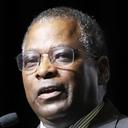
Curtis Jones
TRUSTEES
Michael Kendall
TRUSTEES

Charles Releford
TRUSTEES
Cheryl Walker
TRUSTEES
Yolanda Walker
TRUSTEES
Belinda White
Trustee

George Dennis Sale Kelsey
Our scholars don't just receive funding — they join a network. Born in Columbus, Georgia, July 24, 1900, he was raised in Griffin, Georgia. In 1928, he graduated as valedictorian of his class from Cabin Creek High School in Griffin. Afterwards, he entered Morehouse College in the fall of 1928 and received his Bachelor of Arts degree in 1934 with high honors. In 1938, he graduated from Andover Newton Theological School in Newton Centre, MA, with a Bachelor of Divinity degree and as valedictorian. And he did not stop there: he was ordained as a minister in the Providence Baptist Church in Atlanta, received his Ph.D. in Philosophy from Yale in 1946 and from 1945 to 1948, Kelsey served as the Director of the School of Religion at Morehouse College and was a visiting lecturer at Gammon Theological Seminary. Dr. Kelsey taught Martin Luther King, Jr., who studied sociology at Morehouse. A member of the class of 1948, King received his highest marks in his first two years of college in Kelsey’s Bible class. King later cited George Kelsey as one of his main influences in pursuing the study of race and religion.